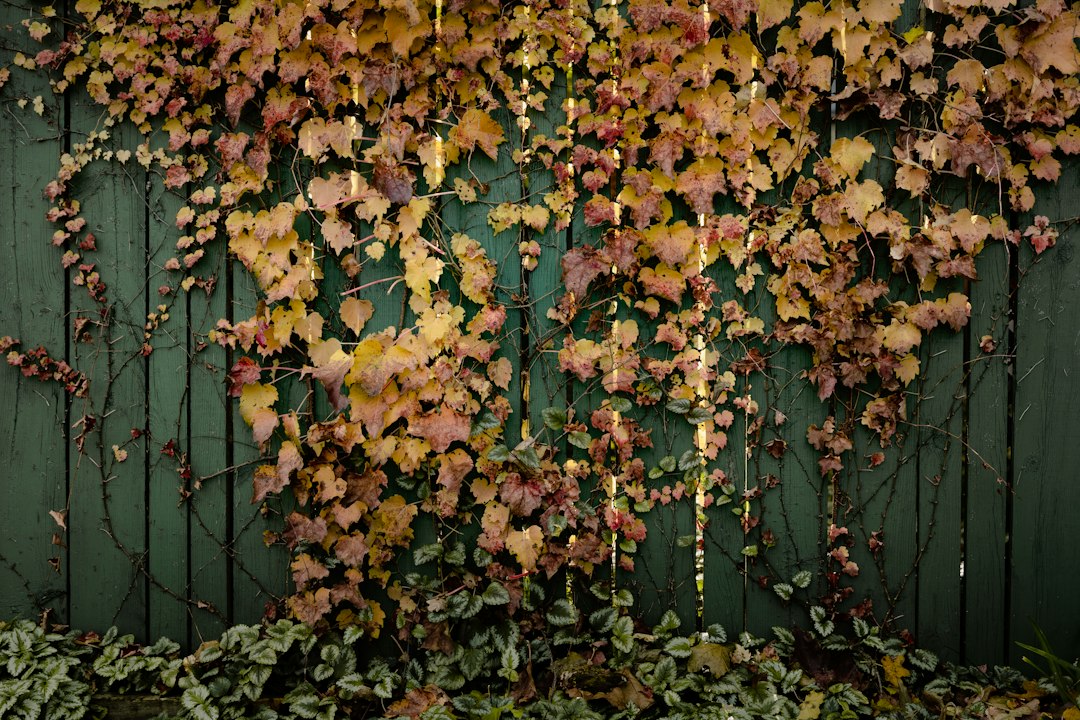
There’s something about an autumn garden clearance that makes people realise just how much they’ve been ignoring.
All summer, the garden looks fine. Shrubs are full, climbing plants cover the boundaries and everything feels green and established. Then October arrives, the secateurs come out and suddenly there’s a fence behind all that growth that nobody has properly seen since April.
Sometimes it’s in reasonable condition.
Sometimes it’s barely standing.
After years working on fencing around Leeds and West Yorkshire, I’ve seen plenty of homeowners discover problems during autumn clearances that have clearly been developing for years. Rotten rails, loose posts, broken panels and timber so damp you can push a screwdriver straight through it.
The frustrating thing is that many of these problems could have been dealt with much earlier.
It’s one reason autumn is a sensible time to assess whether existing fencing needs attention or whether it’s worth speaking to a local fencing contractor before winter makes matters worse.
What Summer Growth Has Been Hiding
Plants are remarkably good at concealing damaged fencing.
A mature shrub can hide an entire panel. Ivy can cover several metres of boundary. Climbing roses spread across rails and posts until it’s difficult to see what’s supporting what.
During summer, nobody thinks much about it.
The garden looks healthy. The plants are flowering. Everything seems fine.
Then the clearance begins.
I’ve pulled back overgrown vegetation and found panels hanging from a single fixing. I’ve seen rails that had completely rotted away while thick ivy held the remaining timber together.
You wouldn’t have known from looking at the garden in July.
That’s the danger of allowing plants to completely cover a boundary. They don’t necessarily cause every problem, but they make existing problems much harder to spot.
And when something eventually fails, it tends to be a bigger job than expected.
Ivy Can Become Part of the Structure
Ivy deserves particular attention.
It’s one of the most common plants I encounter growing across old fencing, and it can become surprisingly heavy.
A little ivy climbing up a post isn’t necessarily a disaster. Leave it unchecked for ten years, though, and you’re dealing with something entirely different.
The stems thicken. Growth spreads through gaps between boards. Roots and shoots find their way around rails and fixings.
Eventually, the plant becomes tangled through the entire fence.
I’ve worked on boundaries where removing the ivy was enough to make the remaining panels collapse.
The timber had already failed. The plant was effectively holding everything together.
That’s not a good situation to discover halfway through a weekend garden clearance.
Heavy vegetation also catches wind. When autumn rain soaks the leaves and stems, the extra weight adds further strain.
If your fence is already weak, that combination can finish it off.
Rotten Timber Doesn’t Always Look Rotten
People often expect rotten wood to look black, crumbly and obviously damaged.
Sometimes it does.
But early decay can be much less noticeable.
A timber rail might look perfectly sound from the front while the rear face has been sitting against damp vegetation for years. The outside remains reasonably firm, but the wood has softened around joints and fixings.
You don’t always see it until you touch it.
One simple check is to press a screwdriver gently against any suspicious areas, particularly near the bottom of posts and around rail connections.
Sound timber should resist light pressure.
If the tool sinks into the wood with very little effort, there’s likely to be decay.
Don’t start stabbing every panel in the garden, though. You’re checking for softness, not trying to create damage.
Pay particular attention to places where water collects or where plants have prevented the timber from drying.
The Bottom of the Fence Tells You Plenty
If I could choose one area for homeowners to inspect during autumn, it would be the bottom 150mm of their fencing.
That’s where many problems begin.
Over the years, soil levels rise. People add compost, decorative bark, gravel and fresh planting. Leaves gather around the boundary and gradually break down.
Eventually, timber that was originally clear of the ground becomes buried.
It’s common around raised beds.
A homeowner builds a lovely new border against the fence, fills it with soil and plants everything up. The garden looks fantastic.
Unfortunately, the timber now has damp soil pressed against it for months at a time.
Pressure treatment helps protect timber, but it doesn’t make it immune to decay.
Gravel boards are there to protect panels from ground moisture. If they’re buried beneath soil and mulch, they’re not getting much chance to do their job.
Clear the base during your autumn tidy-up and see what’s actually happening.
You might be surprised.
Not Every Damaged Panel Needs Replacing
This is worth saying because homeowners sometimes assume the worst.
Finding damage doesn’t automatically mean you need a completely new fence.
A cracked rail can sometimes be replaced. Loose fixings can be renewed. A damaged panel may be swapped without disturbing the posts.
The key question is whether the main structure remains sound.
If the posts are straight, secure and free from serious decay, repairs may be perfectly sensible.
If several posts are moving and the rails have deteriorated, replacing individual boards can become a waste of money.
I’ve seen people spend a fair amount patching old fencing only to replace the whole lot the following winter.
Sometimes a repair is the right answer.
Sometimes it’s simply delaying the inevitable.
The trick is knowing the difference before spending money.
Loose Posts Often Go Unnoticed Until Autumn
A fence covered in plants can hide movement surprisingly well.
Thick shrubs support panels from one side. Climbing plants tie sections together. Dense borders make it difficult to reach the posts.
Once everything is cleared, the fence suddenly feels loose.
That doesn’t necessarily mean the clearance caused the problem.
More likely, the vegetation had been concealing it.
Give each accessible post a gentle but firm push and watch the base.
A little movement in a timber panel is normal. The post itself shouldn’t rock around in the ground.
Around Leeds, heavy clay soil can complicate matters. It expands during wet weather and contracts through dry spells, placing repeated pressure on foundations.
A shallow post may gradually loosen over several seasons.
By the time you notice the fence leaning, the problem can be well established.
Autumn Weather Makes Small Weaknesses Worse
Late October and November can be awkward months for fencing.
The ground becomes wetter. Leaves collect around timber. Daylight hours shorten and gardens take longer to dry after rain.
Then the wind arrives.
A fence that’s been weakened by years of moisture and poor maintenance suddenly has to cope with heavy gusts.
That’s why I prefer dealing with obvious problems before the worst winter weather.
Waiting until a panel collapses rarely saves money.
It can also create an awkward situation with neighbours, particularly when damaged fencing falls into an adjoining garden.
There’s nothing enjoyable about arranging emergency repairs in freezing rain because a loose post was ignored throughout autumn.
Climbing Roses Need a Different Approach
Not every climbing plant should be treated like ivy.
Climbing roses, honeysuckle and clematis can work beautifully alongside fencing, but they still need proper support.
One mistake I regularly see is heavy plants attached directly to lightweight fence panels.
The plants grow larger every year, while the panels were never designed to carry that weight.
When the timber starts ageing, the additional load becomes a problem.
A separate trellis or support structure can sometimes be a better solution, provided it’s installed properly.
It also makes future fence maintenance much easier.
You don’t want to dismantle a mature rose every time a rail needs attention.
A little thought during planting can save considerable trouble later.
Check Behind Sheds and Garden Buildings
These are often the worst areas.
A shed gets installed close to the boundary. Nobody can reach behind it. Leaves collect, weeds grow and water sits against the fence.
Ten years later, someone decides to clear the space.
The timber is in terrible condition.
Restricted airflow can make matters worse, particularly where fencing sits permanently in shade.
I’ve seen sections behind sheds deteriorate far more quickly than exposed fencing along the same boundary.
The materials were identical.
The conditions weren’t.
If you can safely access these areas during autumn, it’s worth having a look.
You may find that a small amount of clearing improves drainage and airflow considerably.
Newer Fences Aren’t Always Better
People sometimes assume a fence must be in good condition because it’s only five or six years old.
I wouldn’t rely on that.
I’ve removed relatively new fencing where posts were installed far too shallow, rails were poorly fixed and cheap panels had already started falling apart.
Meanwhile, I’ve seen fifteen-year-old featheredge fencing still standing perfectly straight.
Age tells you something.
Workmanship tells you more.
A properly installed fence should cope with normal seasonal changes without significant movement.
If you’re finding major structural problems after only a few years, it’s worth questioning how the original installation was carried out.
Be Careful When Clearing Shared Boundaries
This is where a straightforward garden job can become complicated.
Not every fence belongs to the person whose garden it faces.
Before removing panels, cutting through attached plants or making structural changes, establish who owns or is responsible for the boundary.
Don’t assume the fence belongs to you because the posts are on your side.
That old rule about which side of the fence faces which property isn’t a reliable way to establish ownership.
Title documents, previous agreements and discussions with neighbours may help clarify matters.
If the fence is shared or ownership is uncertain, speak to the neighbour before starting work.
A damaged fence is annoying enough without turning it into a boundary dispute.
What Should You Check During an Autumn Clearance?
You don’t need to turn a garden tidy-up into a full structural survey.
A few basic checks will reveal most obvious problems.
- Look for posts leaning or moving at ground level.
- Check rails for cracks, softness and failed joints.
- Inspect the bottom of panels for moisture damage.
- Clear soil, leaves and mulch away from timber where practical.
- Look for screws and nails pulling out of the wood.
- Check whether gates still close and latch properly.
- Remove excessive plant growth placing weight on panels.
- Watch for water collecting around post bases after rain.
Take particular care with old fencing that’s heavily covered in vegetation. Removing plants can expose unstable sections, so don’t pull aggressively against panels that already look weak.
If a substantial section is leaning, leave structural work to someone equipped to deal with it safely.
A Clear Boundary Makes Future Maintenance Easier
There’s another benefit to autumn clearance that people often overlook.
Once the fence is visible again, you can plan how the boundary should be maintained.
Perhaps the planting needs moving slightly further away.
Maybe a raised bed needs a separate retaining edge rather than relying on the fence.
You might discover that a section needs better drainage or that heavy climbers would be better supported independently.
These changes don’t have to be expensive.
In many cases, they’re simply about giving the fencing room to dry and making sure you can inspect it occasionally.
For homeowners considering replacement, experienced fencing contractors in Leeds can assess the condition of the existing posts and recommend whether repairs or a new installation make more sense.
There’s little value in installing expensive new panels if the surrounding conditions will cause the same problems again.
The Best Time to Find Damage Is Before Something Falls
I quite like autumn garden clearances.
Not because clearing wet leaves and tangled ivy is particularly enjoyable, but because it’s one of the few times homeowners get a proper look at boundaries they’ve ignored all summer.
And fences do get ignored.
They sit there quietly doing their job until something goes wrong.
A good fence might survive fifteen or twenty years with relatively little attention. A poor one can start failing after only a handful of winters.
The difference often comes down to installation quality, drainage and whether small problems were dealt with when they first appeared.
If you’re clearing the garden this autumn, spend a few extra minutes looking at the fencing.
Check the posts. Look behind the plants. See what’s happening at ground level.
You don’t need to replace everything that looks weathered. Old timber can be perfectly sound, and a few faded boards aren’t a structural problem.
But if the fence moves when you touch it, the rails are soft or the panels are being held upright by ivy, don’t pretend it’ll sort itself out.
Winter has a habit of making those decisions for you.
Key Takeaways
- During autumn garden clearances, homeowners often discover hidden issues with their fencing that have developed over years.
- Heavy vegetation, like ivy, can conceal damaged fencing and even contribute to its structural integrity, making it crucial to inspect these plants during maintenance.
- Rotten timber may not always appear visibly damaged; early decay can be concealed behind damp vegetation or soil, necessitating careful inspection.
- Inspecting the bottom 150mm of fencing is important, as soil accumulation and moisture can lead to decay that homeowners may not recognize until it’s too late.
- Not all damaged fence panels need complete replacement; sometimes minor repairs can extend the life of the existing structure if the main support is sound.
- Loose posts are often hidden by thick foliage and may go unnoticed until the autumn clearance, revealing potential structural issues.